July 30, 2026
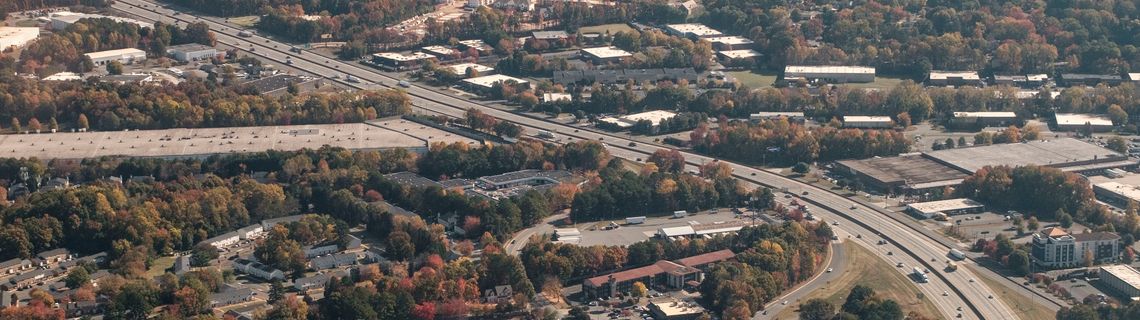
Clayton and Zebulon sit on the eastern edge of the Triangle metro, close enough to Raleigh's job base and highway network to capture serious residential growth, but still priced and positioned like the smaller towns they were a decade ago. That gap between where the rooftops are landing and where the commercial supply currently sits is the whole story here, and it's a story that's still very much in its early-to-middle innings.
What Makes This Market Different
Both towns benefit from proximity to major Triangle employment centers along the US-70 and US-64 corridors, without carrying Wake County's land and construction costs. New residential subdivisions have been going up steadily on both sides of the Johnston-Wake county line, drawn by relative affordability, newer housing stock, and a shorter commute to Raleigh, RTP, and the growing employment base around the Wake County line than more distant Johnston County towns can offer.
The pattern that matters for commercial real estate is a familiar one in fast-growing suburban and exurban markets: residential rooftops arrive first, and retail, medical, and service commercial space lags behind by a few years. That lag is uncomfortable for residents waiting on more grocery, dining, and service options, but it's an opportunity window for anyone positioned to deliver commercial space into a market that's under-retailed relative to its growing rooftop count.
Property Types Worth Watching
Retail and restaurant space. This is the most obvious near-term opportunity. As new subdivisions fill in, demand for grocery-anchored retail, quick-service and casual dining, and everyday service retail (salons, fitness, urgent care, banking) consistently outpaces what's currently built. Investors and developers who can move on well-located retail sites and pad sites along the main corridors are positioned ahead of demand rather than chasing it.
Medical and professional office. Population growth of this kind reliably pulls medical, dental, and professional office demand behind it, typically with a delay after the retail wave. Smaller medical office and professional suites near the growing residential base are a solid owner-occupant or small-investor play, particularly for healthcare providers looking to get ahead of the population curve rather than follow it.
Light industrial and flex space. As the Triangle's industrial and logistics footprint continues to push outward from Raleigh, Clayton and Zebulon's highway access and available land make them logical landing spots for flex, warehouse, and light manufacturing users who need Triangle proximity without Triangle land costs.
Owner-occupied commercial. For small business owners — contractors, tradespeople, retailers, medical practices — buying rather than leasing in this market can make long-term sense while land and building costs are still meaningfully below core Wake County pricing, with the built-in tailwind of a growing local customer base.
Who This Market Fits
This is a market for investors and business owners with a genuine growth thesis and a willingness to be early. The infrastructure and rooftops are arriving in real time, not on some distant projection, which reduces (though doesn't eliminate) the usual risk of betting on growth that never materializes. It's less suited to someone who wants a fully stabilized, mature market with deep comps and predictable leasing patterns — that market exists closer to central Raleigh, at a much higher basis.
For a business owner deciding where to locate — a retailer, restaurant operator, or medical practice — Clayton and Zebulon offer a genuine growth curve at a rent and purchase-price basis still below the core Triangle, with a customer base that's expanding rather than saturated.
Practical Guidance Before You Buy or Lease
- Study the residential pipeline, not just current population. Approved and under-construction residential projects tell you more about future retail and service demand than current headcounts do. Pull permit data and planning board activity before you underwrite.
- Watch corridor and highway access closely. Visibility and access along US-70, US-64, and the connecting arterials matter enormously for retail success here; a site one road over from the main corridor can perform very differently.
- Confirm utility and infrastructure capacity. Rapid growth can outpace water, sewer, and road capacity in specific pockets. Verify infrastructure readiness for your specific site before committing to a development timeline.
- Underwrite the lag, not just the eventual demand. Being early means some retail concepts may take longer to stabilize than they would in a mature market. Build a realistic lease-up or stabilization timeline into your numbers.
If you want to see how the local numbers and demographics are trending in real time, you can see current listings and demographics on my Clayton-Zebulon market page.
How I Help
Fast-growing overflow markets reward buyers who move on good sites early and get burned by buyers who overpay for hype without a real read on the pipeline. I track the residential and infrastructure data behind Clayton and Zebulon's growth closely, and I help clients tell the difference between a genuinely under-supplied corridor and an overpriced story. Whether you're chasing a retail pad site, a medical office building, or an owner-occupied purchase, I'll help you underwrite it against what's actually coming, not just what's already there.
If you're evaluating Clayton, Zebulon, or the broader Johnston County growth corridor, I'm happy to run the numbers with you. You can schedule a call here or reach me at sebastian@mullarkeycre.com or (919) 797-5900.
This article is for informational purposes only and does not constitute investment, tax, or legal advice. Consult with a qualified financial advisor, CPA, and real estate attorney before making an investment decision.