July 15, 2026
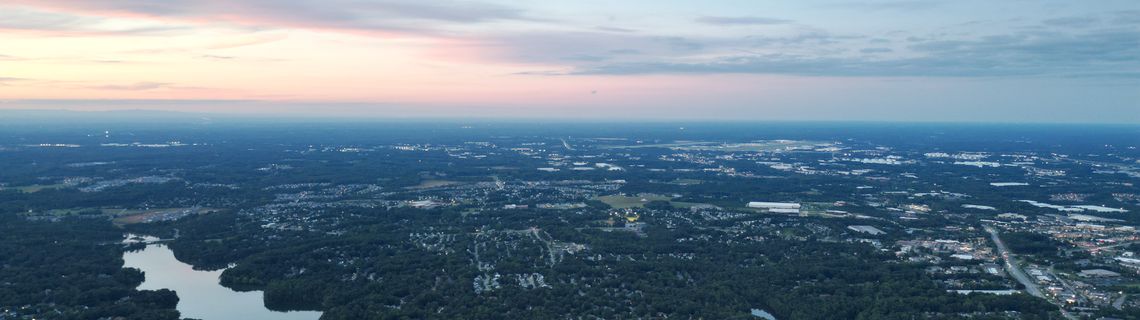
When most people think about North Carolina commercial real estate, the Triangle and Charlotte dominate the conversation. That makes sense. Those markets are large, liquid, and well-covered by institutional capital. But for investors and business owners willing to look a little further east, Greenville offers something those metros increasingly do not: strong fundamentals at a reasonable basis.
I've spent my career working this market. Here's why I think Greenville deserves a closer look from anyone evaluating commercial opportunities in Eastern North Carolina.
ECU Is the Economic Engine
East Carolina University enrolls roughly 28,000 to 29,000 students annually, making it one of the largest universities in the UNC system. But enrollment numbers only tell part of the story. ECU's total annual economic impact on the region is estimated at over $1.7 billion. That figure accounts for direct university spending, employee wages, student expenditures, and the downstream businesses that exist because the university is here.
For commercial real estate, the practical effect is a large, stable population base that renews itself every year. Students need housing, food, retail, and entertainment. Faculty and staff need office space, childcare, and professional services. The university itself is a consistent buyer of goods, services, and leased space. That kind of institutional anchor creates a floor under demand that most secondary markets simply don't have.
ECU Health: The Region's Largest Employer
ECU Health (formerly Vidant Health) operates the region's only Level I trauma center and employs thousands of people across Pitt County and the surrounding area. The health system is the single largest employer in Eastern North Carolina, and its continued expansion has a direct effect on commercial demand.
Medical professionals need housing, and they tend to prefer newer, well-located apartments or rental homes. That drives multi-family demand. The physicians, administrators, and specialists who relocate here need office space, retail services, and dining options. The ripple effect from a major health system is significant and ongoing. Every new residency program or clinic expansion translates into measurable commercial activity.
Population Growth in Pitt County
Pitt County has seen steady population growth over the past decade, outpacing most other Eastern NC counties. While the growth rate is not comparable to Wake or Mecklenburg counties, it is notable precisely because it's happening in a region where many counties are losing population. Greenville is absorbing residents from surrounding rural areas as well as attracting newcomers from other parts of the state.
This matters for commercial real estate because population growth drives absorption. More residents means more demand for retail square footage, more need for medical and professional office space, and more pressure on the housing stock. In a market where new construction has been limited, that demand translates into tighter vacancy rates and stronger rents.
Multi-Family Demand: Students and Professionals
Greenville has two distinct multi-family demand drivers that operate on different cycles. Student housing follows enrollment patterns and tends to cluster near campus. Professional housing, driven largely by ECU Health employees and university faculty, gravitates toward newer developments along Greenville Boulevard and in the Fire Tower Road corridor.
This dual-demand structure is unusual for a market this size. It provides multi-family investors with a diversified tenant base and reduces the risk of over-reliance on any single demand source. Cap rates here still run meaningfully higher than comparable properties in Raleigh-Durham, which makes the math work for investors looking for cash flow rather than pure appreciation plays.
Retail and Office Along Key Corridors
Greenville Boulevard, Arlington Boulevard, and the evolving Red Banks Road corridor are the primary commercial arteries. Retail vacancy along Greenville Boulevard has remained relatively tight, driven by a combination of national tenants, regional chains, and local operators serving the university and hospital populations.
Office demand is more nuanced. Traditional office space faces the same headwinds here as everywhere else, but medical office remains strong. Practices affiliated with ECU Health, independent specialists, and ancillary medical services continue to absorb space. For investors, medical office in this market is one of the more defensible asset classes.
Industrial Growth Near the Airport and US-264
The area around Pitt-Greenville Airport and along the US-264 corridor has seen growing interest from industrial and logistics users. This is still an emerging trend rather than an established one, but the fundamentals are there: available land, reasonable costs, highway connectivity to the Port of Morehead City and to the Triangle, and a labor force that is large enough to support distribution and light manufacturing operations.
Several spec industrial projects have been discussed or are in early stages. If this corridor develops as expected, it could meaningfully expand the types of commercial investment opportunities available in the Greenville market.
How Greenville Compares to Other Eastern NC Markets
Greenville is not the only market in Eastern North Carolina, but it is arguably the most diversified. New Bern benefits from the military presence at MCAS Cherry Point but is more narrowly dependent on defense spending. Jacksonville (Camp Lejeune) faces similar concentration risk. Kinston and Rocky Mount are smaller and have experienced more economic headwinds.
Greenville's combination of a major university, a regional health system, and a growing population base gives it a level of economic resilience that most Eastern NC markets lack. That resilience translates into more consistent commercial real estate performance across cycles.
Why Triangle Investors Are Looking East
Raleigh-Durham has become an increasingly competitive and expensive market. Cap rates have compressed, land costs have risen, and institutional capital has flooded in. For individual investors and smaller groups, the math has gotten harder. Greenville offers higher yields, lower barriers to entry, and less institutional competition. A well-located multi-family property or retail center here can generate returns that are simply no longer available in the Triangle at comparable risk levels.
The drive from Raleigh to Greenville is about 90 minutes on US-264. For an investor who is comfortable with secondary markets and willing to develop local expertise (or work with someone who has it), Eastern NC represents a real opportunity.
Looking Ahead
I'm not going to tell you that Greenville is the next Raleigh. It isn't, and pretending otherwise would be irresponsible. What I will tell you is that this market has strong, identifiable demand drivers, reasonable pricing, and genuine growth potential. For investors and business owners who take the time to understand the fundamentals, there are opportunities here that deserve serious consideration.
If you're evaluating commercial real estate in Eastern North Carolina, whether it's a multi-family acquisition, a retail lease, or an office relocation, I'm happy to share what I know about this market. No pitch, just information. Feel free to schedule a call or reach out at sebastian@mullarkeycre.com.