July 30, 2026
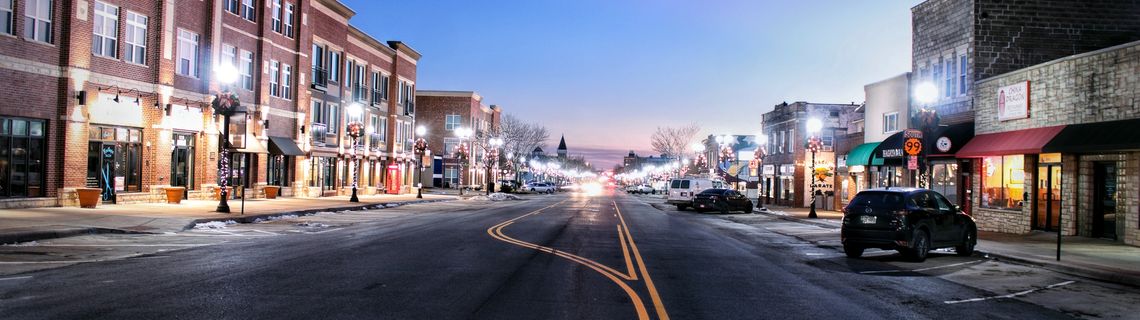
Rocky Mount occupies an interesting position in Eastern North Carolina: it's not quite Triangle-adjacent enough to ride that market's coattails the way Wilson does, and it's not a coastal destination market either. It's genuinely its own thing, a town straddling Nash and Edgecombe counties with a manufacturing and distribution history that left it with more commercial and industrial building stock than most towns its size, a lot of it aging and underused. For an investor who's comfortable with redevelopment, that's the opportunity.
I bring this market up with clients specifically when the conversation turns to value-add and redevelopment plays, because Rocky Mount has more of that raw material than most Eastern NC towns.
What Makes Rocky Mount Different
Location is the first thing to understand. Rocky Mount sits directly on I-95, roughly midway between Raleigh and the eastern part of the state, which has made it a natural stop for distribution and logistics operations for decades. That history predates the current wave of I-95 corridor development you see in Wilson and further south; Rocky Mount was a manufacturing and rail town well before logistics became a buzzword, and the building stock reflects that.
The town's rail heritage, it sits on a major CSX line, along with its highway access, gave it an industrial base that outlasted the decline of traditional textile and manufacturing employment in the region. What's left is a mix of active, modern industrial and distribution space alongside older manufacturing buildings and commercial corridors that haven't been updated in a generation. Nash Community College and the broader Nash and Edgecombe county institutional presence add a stabilizing, if not explosive, layer of demand.
The straddling of two counties is worth understanding operationally too. Zoning, permitting, and tax treatment can differ depending on which side of the county line a property sits on, which matters more here than in most single-county Eastern NC markets.
Property Types That Perform in Rocky Mount
Redevelopment and adaptive reuse. This is Rocky Mount's clearest opportunity. Older manufacturing buildings, commercial corridors, and downtown buildings that have gone underused for years represent a real basis-per-square-foot advantage for an investor with the appetite and capital to reposition them. This isn't a passive buy-and-hold play; it takes work, but the spread between acquisition cost and stabilized value can be meaningful.
Industrial and distribution. Active, well-located industrial space near the interstate and rail infrastructure continues to see demand from regional operators. This is a market where rail access specifically can be a differentiator that a lot of investors overlook when they're only thinking about highway proximity.
Multi-family. Rocky Mount's multi-family market offers one of the more affordable per-door entry points in Eastern NC, and with a stable, if not fast-growing, population base, occupancy has generally held up. For investors focused on current yield rather than rent growth, this is worth evaluating.
Retail in stabilized corridors. Retail performs unevenly across Rocky Mount depending on corridor; the more established commercial nodes with visible anchor tenants hold up well, while older strip centers off the main corridors need the same redevelopment thinking as the industrial stock.
What to Know Before You Buy or Lease Here
Rocky Mount is not a market to underwrite passively. The dispersion in building quality and location is wider here than in a lot of Eastern NC towns, meaning average market data will mislead you more than usual. A property two blocks apart from another can have a completely different trajectory depending on corridor health and building condition. Walk the property, walk the block, and don't rely solely on comps pulled from a database.
If you're specifically looking for redevelopment opportunities, budget realistically for the capital improvements older industrial and commercial buildings will need, and get a property condition assessment before you finalize pricing. The basis advantage only holds up if the renovation costs don't eat it.
The straddling-county issue is also worth raising directly with your broker and attorney early, rather than discovering it during due diligence. A property that looks straightforward from the street can carry different tax rates, utility providers, or permitting timelines depending on which side of the Nash-Edgecombe line it falls on, and that can affect both your holding costs and how quickly you can execute a renovation plan.
For business owners, Rocky Mount's affordability and highway/rail access make it a reasonable option for distribution-dependent operations or businesses serving Nash and Edgecombe counties, provided you go in with clear eyes about which corridors are working and which need more patience.
It's also worth thinking about financing early in the process. Lenders can be more conservative about older, partially vacant, or mixed-use redevelopment properties than they are about a stabilized asset with in-place income, which means an investor pursuing a value-add strategy in Rocky Mount should line up capital and have a realistic renovation budget worked out before making an offer, not after.
You can see current listings and demographics on my Rocky Mount market page, which covers both the Nash and Edgecombe county sides of the market.
How I Help
Rocky Mount rewards investors who do their homework on specific corridors and building conditions rather than trading on the town's general reputation. Whether you're evaluating a redevelopment opportunity, an industrial acquisition, or a multi-family purchase, I can help you separate the real value-add plays from the buildings that will cost more to fix than they're worth.
You can schedule a call here or reach me directly at sebastian@mullarkeycre.com or (919) 797-5900.
This article is for informational purposes only and does not constitute investment, tax, or legal advice. Consult with a qualified financial advisor, CPA, and real estate attorney before making an investment decision.