July 30, 2026
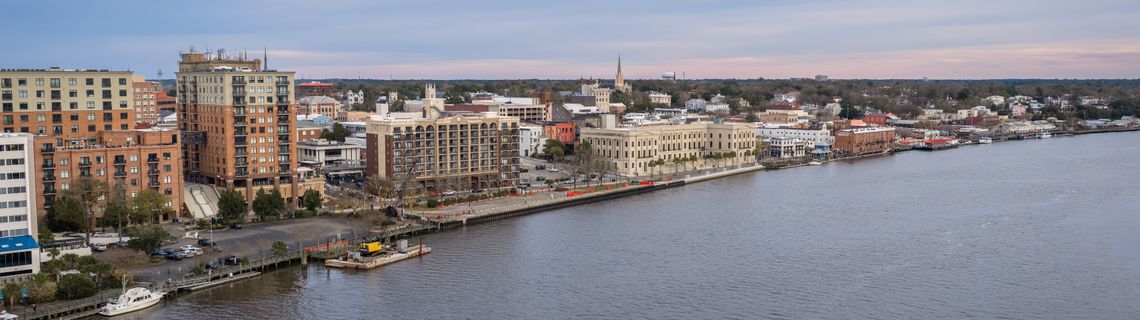
Wilmington gets grouped in with Eastern NC in most regional conversations, but it doesn't really behave like the rest of the region. It's coastal, it's tourism-driven, it has a working port, and it carries a price point that's noticeably higher than Greenville, Goldsboro, or New Bern. For investors and business owners evaluating the market, that distinction matters more than the map suggests.
Here's what makes Wilmington's commercial real estate market distinct, which property types tend to perform well, and what to weigh before you buy or lease here.
What Makes Wilmington Different
Wilmington's economy doesn't lean on a single employer or industry the way some smaller Eastern NC markets do. It's a genuinely diversified base: a deep-water port that moves freight in and out of the region, a growing healthcare system anchoring thousands of jobs, a film and production industry that's been active here for decades, and a university, UNCW, that feeds both talent and demand into the local economy. Layer tourism on top of that, both leisure visitors drawn to the beaches and the historic downtown riverfront, and you get a market with more than one reason to keep growing.
That diversification is exactly why Wilmington trades at a premium to inland Eastern NC markets. Investors and businesses are willing to pay more for a market that isn't dependent on one employer, one industry cycle, or one seasonal pattern. It's also why institutional and out-of-market capital shows up here more often than it does in smaller regional markets, which affects everything from cap rates to how quickly a listing moves.
Property Types That Perform Well
A few categories stand out in Wilmington specifically:
- Retail and mixed-use. Downtown Wilmington and the corridors feeding the beach communities support retail and mixed-use development at a level most Eastern NC markets can't match, driven by both year-round residents and a tourism season that materially boosts foot traffic and spending for months at a time.
- Medical and professional office. A growing healthcare system and the physician practices, specialty clinics, and support services that cluster around it create steady demand for medical office space, which tends to hold value better than general office through market cycles.
- Industrial and flex space. The port and the logistics activity around it support demand for warehouse, distribution, and flex industrial space, particularly in the corridors with easy highway access to move freight in and out of the region.
- Multi-family. Population growth, university housing demand, and a steady stream of relocation into the area keep multi-family occupancy healthy, though new supply has been more active here than in smaller markets, so underwriting rent growth conservatively matters.
What This Means for Investors
The trade-off with Wilmington is straightforward: you're paying more per dollar of income than you would in Greenville, Goldsboro, or New Bern, but you're buying into a market with more liquidity, more buyer competition when you eventually sell, and less dependence on any single economic driver. For an investor who wants current yield above everything else, that trade-off may not make sense, and a secondary or tertiary market further inland could be the better fit. For an investor prioritizing long-term stability and exit liquidity, Wilmington's fundamentals are hard to argue with.
Seasonality is worth underwriting carefully, especially for retail assets near the beach communities. A strip center that looks fully leased and busy in July can tell a very different story in January. Ask for trailing twelve-month financials, not a single strong season, before you rely on the numbers.
If you want to compare Wilmington directly against other markets in the region, you can see current listings and demographics on my Wilmington market page, alongside the other Eastern NC submarkets I cover.
What This Means for Business Owners
If you're a business owner looking at Wilmington for a lease or a purchase, the calculus is different but related. You're paying more per square foot than you would in a smaller inland market, but you're also getting access to a larger, more diverse customer base and a labor pool that draws from the university and the broader metro area. For businesses whose customer traffic depends on tourism, downtown and near-beach locations can be excellent, but plan your staffing and cash flow around the seasonal swing rather than assuming July traffic year-round.
For businesses less dependent on tourist foot traffic, the corridors outside the historic core and away from the immediate beach communities often offer a better balance of visibility, accessibility, and lease rate. It's worth walking several submarkets before committing, since Wilmington's pricing and demand patterns can vary significantly block to block in a way that's less pronounced in smaller Eastern NC towns.
How I Help
Whether you're underwriting an acquisition in Wilmington, comparing it against other Eastern NC markets, or scouting a lease location for your business, I can walk the numbers and the neighborhoods with you so you know exactly what you're buying into before you commit. You can schedule a call here or reach me directly at sebastian@mullarkeycre.com or (919) 797-5900.
This article is for informational purposes only and does not constitute investment, tax, or legal advice. Consult with a qualified financial advisor, CPA, and real estate attorney before making an investment decision.