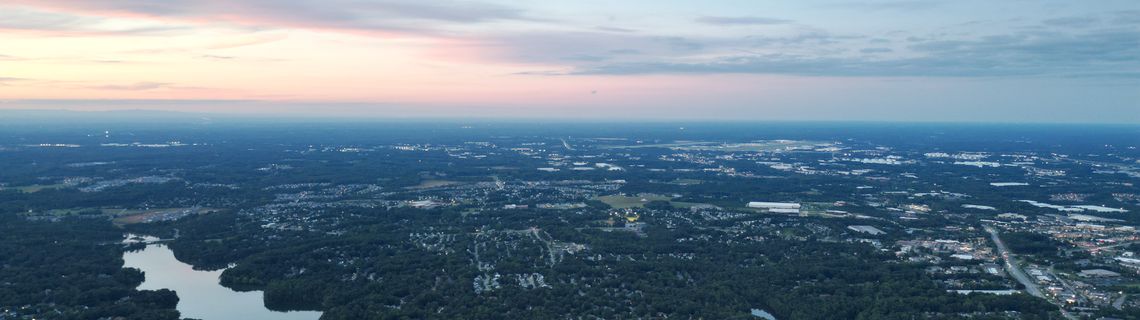
Market Overview
Greenville sits at the heart of Pitt County with a city population approaching 95,000 and a broader metro area of roughly 180,000 residents. The two dominant institutions here shape everything about the local economy: East Carolina University enrolls approximately 28,000 students across its main campus and health sciences division, while ECU Health Medical Center (formerly Vidant) serves as the primary Level I trauma center and teaching hospital for the entire eastern region of the state. Together, these institutions make Greenville a University Medical Center designation city and the largest urban center between Raleigh and the coast.
The economic base extends well beyond campus and hospital grounds. Pitt County supports a diverse mix of food processing and manufacturing operations, a growing corridor of biotech and medical research ventures, and the retail and service businesses that naturally cluster around a university town. Companies like Grady-White Boats, Metrics Contract Services, and Nacco Industries maintain significant operations here, providing an employment base that complements the education and healthcare sectors.
Population growth in Pitt County has been steady over the past decade, driven by medical professionals relocating for positions at ECU Health, faculty and staff supporting the university's expansion, and young professionals drawn to the lower cost of living compared to the Triangle region. This growth has created consistent demand for commercial space across nearly every property type, from medical office and retail to industrial and multi-family.
Greenville's downtown has experienced a notable revival over the past several years, with adaptive reuse projects converting older buildings into mixed-use developments that blend ground-floor retail and restaurant space with upper-story apartments. The Dickinson Avenue Arts District and the Town Common waterfront park have helped reposition downtown as a walkable, livable district that attracts both residents and commercial tenants.
The city also functions as the retail and services hub for a multi-county region. Residents from Martin, Beaufort, Greene, Edgecombe, and Lenoir counties regularly travel to Greenville for shopping, dining, healthcare appointments, and professional services. This regional draw inflates daytime population well beyond residential figures and creates commercial leasing demand that exceeds what the city's own population would suggest.
Property Types in Pitt County
Medical office remains one of the strongest property segments in the Greenville market. The ongoing expansion of ECU Health's campus and affiliated clinics creates persistent demand for medical office space, particularly along the Arlington Boulevard and Memorial Drive corridors near the hospital complex. Specialty practices, outpatient surgery centers, and ancillary medical services providers compete for well-located space with proximity to the medical center. The trend toward outpatient care delivery has only accelerated this demand, as health systems push services into satellite locations that are more convenient for patients and less expensive to operate than hospital-based facilities.
Retail activity in Pitt County benefits from the spending power of a university population and a regional draw that pulls shoppers from surrounding counties. Greenville Boulevard serves as the primary retail corridor, anchored by national brands and supported by a steady stream of restaurant and service tenants. University-adjacent retail along Charles Boulevard and 10th Street draws foot traffic from students and faculty. Fast-casual dining, fitness concepts, and experiential retail have been gaining ground in recent lease cycles, reflecting broader shifts in how consumers spend their time and money.
Multi-family properties serve two distinct tenant pools in this market. Student housing near ECU's campus commands premium per-bed rents and maintains high occupancy rates tied to enrollment cycles. Workforce housing throughout the county serves medical professionals, manufacturing employees, and service workers, with demand consistently outpacing new supply in the affordable and workforce-rate segments. Investors looking at multi-family in Pitt County benefit from the fact that both tenant pools are institutionally supported, creating a more resilient occupancy profile than markets that depend on a single employer or industry.
Industrial space in Pitt County supports food processing operations, pharmaceutical manufacturing, and regional distribution. The county's location along US-264 and proximity to both the Port of Morehead City and Interstate 95 make it a practical distribution hub for businesses serving eastern North Carolina. The Greenville Industrial Park and surrounding areas offer both existing inventory and development-ready parcels. Cold storage and food-grade facilities are a particular niche in this market, driven by the agricultural output of the surrounding counties.
Office leasing has been evolving as downtown Greenville attracts more professional services firms, coworking operators, and tech-oriented startups. Traditional suburban office parks along Memorial Drive and Arlington Boulevard continue to serve larger tenants, while downtown's revitalized building stock appeals to firms seeking a walkable environment and proximity to the university's talent pipeline. Legal, financial, and insurance firms remain the backbone of suburban office demand, while creative and technology tenants increasingly favor the character and energy of the downtown core.
Why Invest in Greenville Commercial Real Estate
The investment thesis for Pitt County commercial real estate rests on institutional anchors that are unlikely to relocate. East Carolina University has been part of the UNC System since 1972, and its enrollment has remained stable even as other regional universities have faced demographic headwinds. ECU Health's ongoing multi-year expansion program continues to add clinical capacity, research facilities, and support infrastructure, generating both construction-period activity and long-term demand for surrounding commercial space.
Relative affordability is a meaningful advantage. Cap rates in Greenville for stabilized commercial properties remain more favorable than comparable assets in the Raleigh-Durham metro, offering investors stronger cash-on-cash returns. Acquisition costs per square foot for retail, office, and medical office are materially lower than Triangle pricing, while rental rates have been trending upward as demand from medical and university-affiliated tenants continues to grow.
The student and medical professional population creates a built-in rental demand floor that insulates landlords from the worst effects of broader economic downturns. Even during periods of national recession, hospitals continue operating and universities continue enrolling students, maintaining occupancy in both residential and commercial properties. This counter-cyclical characteristic makes Greenville an attractive market for investors seeking stability alongside growth.
Infrastructure improvements have further strengthened the market outlook. The completion of the Greenville Southwest Bypass, ongoing improvements to US-264, and continued investment in the Pitt-Greenville Airport have improved regional connectivity and made the county more accessible to businesses considering eastern North Carolina for operations or distribution.
Tax incentives and economic development programs at both the city and county level add another layer of appeal. The Pitt County Development Commission actively recruits employers and supports expansion projects with incentive packages, while the City of Greenville has deployed targeted incentives for downtown redevelopment and infill construction. For investors and owner-occupants, these programs can meaningfully reduce the effective cost of acquisition or build-out.
The market's rental demand is also diversified across lease structures and tenant types. Medical tenants typically sign longer-term leases with annual escalations, providing predictable income streams. Student-oriented retail tenants turn over more frequently but command higher rents per square foot. Industrial tenants often require customized build-outs but bring multi-year stability. This diversity of lease profiles gives investors the ability to construct portfolios with blended risk characteristics that are difficult to achieve in more homogeneous markets.
Key Areas & Corridors
Greenville Boulevard is the county's primary retail and commercial corridor, stretching from Memorial Drive to the east side of the city. This stretch concentrates the majority of the market's national retail tenants, restaurants, and service-oriented businesses. Vacancy rates along Greenville Boulevard tend to be among the lowest in the market, and pad sites for new development are increasingly scarce.
Arlington Boulevard runs north-south and serves as a critical connector between the ECU Health campus and the residential neighborhoods to the south. Medical office buildings, urgent care facilities, and healthcare-related retail line this corridor, making it the natural location for tenants who need proximity to the medical center without paying on-campus rents.
Red Banks Road represents one of the most active growth areas in Pitt County. New residential subdivisions along this corridor have attracted follow-on retail and service development, and available parcels for commercial use continue to draw interest from developers and owner-occupants looking to serve the expanding population on Greenville's western edge.
Memorial Drive provides direct access to the ECU Health campus and connects to Greenville Boulevard, making it a high-traffic location for both medical office and general commercial tenants. Several newer medical office buildings along this corridor cater to specialty practices and outpatient services.
Downtown Greenville has become the market's most dynamic submarket for mixed-use development. The walkable grid between Evans Street and the Tar River waterfront supports a growing mix of restaurants, boutique retail, creative office space, and upper-story residential. First-floor commercial rents downtown have been rising as foot traffic increases and the tenant mix improves. The Uptown Greenville district and the Five Points area have attracted particular attention from developers looking to capitalize on the walkability trend and proximity to ECU's campus.
Firetower Road and the surrounding area on Greenville's south side have seen increased commercial activity driven by residential growth and improved road infrastructure. This corridor is particularly attractive for service-oriented businesses, medical practices branching out from the hospital district, and fast-casual restaurant operators seeking new rooftops to serve. As Greenville continues to expand southward, Firetower Road is positioned to absorb a meaningful share of the city's next wave of commercial development.
NC-33 / 10th Street Connector links the university district to points east and provides access to several established commercial nodes. This corridor sees heavy student and commuter traffic and supports a mix of convenience retail, restaurants, and service tenants. Properties along the 10th Street Connector benefit from consistent visibility and a captive audience of daily commuters moving between campus, residential neighborhoods, and the Greenville Boulevard retail district.
Winterville, the incorporated town just south of Greenville, has emerged as a bedroom community with its own commercial growth trajectory. Main Street Winterville and the NC-11 corridor support a growing cluster of retail and service tenants catering to families who live in the town's expanding subdivisions. For investors, Winterville offers lower entry points with demographic tailwinds that mirror Greenville's broader growth story.
Evans Street and the University District form the connective tissue between ECU's campus and the downtown core. This stretch supports a dense mix of student-oriented retail, dining, and entertainment tenants, along with professional office space serving businesses that benefit from proximity to the university. Lease turnover in this submarket tends to be higher than in suburban corridors, but rents per square foot are competitive and foot traffic is among the highest in the county.
Transportation & Accessibility
Greenville's location in eastern North Carolina places it within practical driving distance of the Triangle, the coast, and the Hampton Roads metro in Virginia. US-264 serves as the primary east-west corridor connecting Greenville to Raleigh in roughly 90 minutes, while US-13 and NC-11 provide north-south connectivity to the I-95 corridor and the agricultural communities of the Coastal Plain. The Greenville Southwest Bypass has improved traffic flow for commercial vehicles and commuters accessing the southern portions of the city.
Pitt-Greenville Airport (PGV) offers commercial air service and supports corporate and charter aviation, giving businesses and investors direct access to the market without routing through Raleigh-Durham International. For companies with logistics or distribution needs, the county's road network provides efficient access to the Port of Morehead City and the intermodal facilities along the I-95 corridor.
These transportation assets, while modest compared to major metros, are a meaningful advantage for a secondary market and contribute to Greenville's appeal as a regional business hub. The city's internal road network is also well-maintained and relatively uncongested compared to larger North Carolina metros, which translates to shorter commute times and better accessibility for customers, employees, and patients visiting commercial properties throughout the county.
Education & Workforce
Beyond ECU's main campus, the Greenville area benefits from Pitt Community College, which provides workforce training, continuing education, and customized industry training programs that support local employers. The combination of a four-year research university and a strong community college system creates a pipeline of talent across skill levels, from entry-level technical positions to advanced medical and professional roles. For businesses evaluating commercial space in Pitt County, access to this workforce pipeline is often a deciding factor.
ECU's Brody School of Medicine and the College of Allied Health Sciences produce a steady stream of healthcare professionals who frequently choose to remain in the region after completing their training. This retention dynamic has a compounding effect on the local economy: each physician or specialist who stays in Greenville generates demand for office space, housing, and the services that support a professional household. The result is a self-reinforcing cycle of medical talent attraction and commercial real estate demand.
The university also contributes to the local innovation ecosystem. ECU's Miller School of Entrepreneurship, its small business development center, and various research commercialization initiatives create a pipeline of startups and early-stage companies that need flexible office and lab space. While Greenville is not a venture capital hub, the presence of a research university with active technology transfer programs provides a foundation for the kind of organic business formation that supports long-term commercial real estate absorption.
ECU Health & the Medical Economy
No discussion of Greenville's commercial real estate market is complete without addressing the outsized role of ECU Health. The medical center is the largest employer in Pitt County and one of the largest in eastern North Carolina, with thousands of physicians, nurses, researchers, and support staff. Its designation as a Level I trauma center and academic medical center means it draws patients and medical professionals from across the region, and its ongoing capital investment program ensures that demand for surrounding commercial space will persist for years to come.
The ripple effects of the medical campus extend into nearly every property type. Physicians and specialists who practice at ECU Health need office space for private practices. Pharmaceutical and medical device representatives need short-term and long-term accommodations. Medical students and residents create demand for housing and neighborhood retail. Visiting families of patients support the hospitality and restaurant sectors. For commercial real estate investors, the medical economy provides a layer of demand that is difficult to replicate in markets without a major academic health system.
The biotech and life sciences corridor forming around ECU's research programs adds a forward-looking dimension to the medical economy. Contract research organizations, clinical trial management firms, and medical technology companies have been establishing or expanding operations in Pitt County to take advantage of the proximity to ECU Health's patient population and research infrastructure. This emerging sector creates demand for specialized lab and office space that commands premium rents and attracts tenants with strong credit profiles and long-term lease commitments.
Tenant Representation in Greenville
For businesses searching for commercial space in Pitt County, tenant representation ensures that you have an advisor working exclusively in your interest throughout the site selection and lease negotiation process. I help tenants evaluate available properties against their operational requirements, negotiate lease terms that protect their downside, and secure tenant improvement allowances that reduce out-of-pocket build-out costs. In a market where many of the best-located spaces never make it to public listing sites, having a local representative with established landlord relationships is a significant advantage.
Medical practices, in particular, benefit from specialized tenant rep in this market. The difference between a location with strong patient visibility on Arlington Boulevard and a second-floor suite set back from the road can materially affect a practice's growth trajectory. I work with physicians, dentists, veterinarians, and allied health providers to identify spaces that match their clinical workflow, patient access requirements, and long-term expansion plans.
Retail tenants expanding into the Greenville market face a different set of considerations. Site selection for a restaurant or service business along Greenville Boulevard requires an understanding of traffic patterns, co-tenancy dynamics, and lease structures that vary significantly from one shopping center to the next. I help retail operators evaluate the full picture: not just the rent per square foot, but the CAM charges, the exclusivity provisions, the signage rights, and the parking ratios that determine whether a location will support their business model over a five- or ten-year lease term.
Investment Sales & Dispositions
Beyond tenant representation, I advise property owners and investors on acquisition and disposition strategies in the Pitt County market. Whether you are assembling a portfolio of small-bay retail centers, evaluating a medical office building near the hospital campus, or considering a value-add multi-family play in the student housing corridor, I provide market-grounded underwriting support, comparable sales analysis, and access to a buyer network that includes both local operators and institutional capital sources looking to deploy in secondary markets.
For sellers, I bring a marketing approach that positions Pitt County assets in front of the right buyer pool. Many of the most successful transactions in this market happen when a property is presented to investors who already understand the ECU and ECU Health demand story. I leverage my relationships across the eastern North Carolina brokerage community and national listing platforms including LoopNet and CREXi to ensure maximum exposure and competitive offers.
Greenville's Growth Outlook
Greenville has consistently ranked among the faster-growing micropolitan and small metro areas in North Carolina, and the factors driving that growth show no signs of slowing. ECU's strategic plan includes continued investment in health sciences research, graduate programs, and campus infrastructure. ECU Health has announced multi-phase expansion projects that will add beds, operating suites, and outpatient capacity over the coming decade. These institutional commitments represent billions of dollars in planned capital expenditure that will ripple through the local economy and the commercial real estate market.
On the private development side, several mixed-use and residential projects are in various stages of planning and construction across the city. New subdivisions on the western and southern edges of Greenville are bringing rooftops that will support future retail and service development. Downtown continues to attract adaptive reuse projects and new construction, particularly along the Tar River waterfront.
For investors and business owners evaluating Pitt County today, the trajectory points toward continued demand growth across property types, supported by the institutional anchors that make this market fundamentally different from communities that depend on a single employer or cyclical industry. Greenville's combination of a research university, an academic medical center, a diversified manufacturing base, and an expanding population creates the kind of layered demand that sustains commercial property values through economic cycles.
Working with Sebastian in Pitt County
Greenville is my home market. I live here, work here, and have built the relationships that matter most in local commercial real estate: the landlords who own the best-located buildings, the developers planning the next wave of projects, and the property managers who know which spaces are coming available before they hit the market. When you work with me in Pitt County, you get the benefit of someone who understands the nuances that outsiders miss, from which side of a corridor draws more traffic to which landlords are willing to negotiate tenant improvement allowances.
As a CCIM candidate with 133 five-star reviews and active involvement in both tenant representation and investment sales, I bring a level of analytical rigor and market knowledge that matches the complexity of today's commercial transactions. Whether you are a physician opening a new practice near ECU Health, a retailer evaluating Greenville Boulevard locations, or an investor underwriting a multi-family acquisition, I can help you identify the right opportunity, negotiate favorable terms, and close with confidence. My brokerage at Mullarkey Real Estate Group, Inc. provides the operational support and market reach to serve clients across every property type in Pitt County.
I also work with out-of-state investors who recognize the value in eastern North Carolina but need local expertise to execute. From identifying off-market opportunities and coordinating due diligence to connecting you with trusted property managers and contractors, I serve as your boots on the ground in a market where local knowledge is the difference between a strong deal and a costly mistake.
If you are considering a commercial real estate transaction in Greenville or anywhere in Pitt County, I am ready to help. Call me at (919) 797-5900, email sebastian@mullarkeycre.com, or book a call online to get the conversation started.