Market Overview
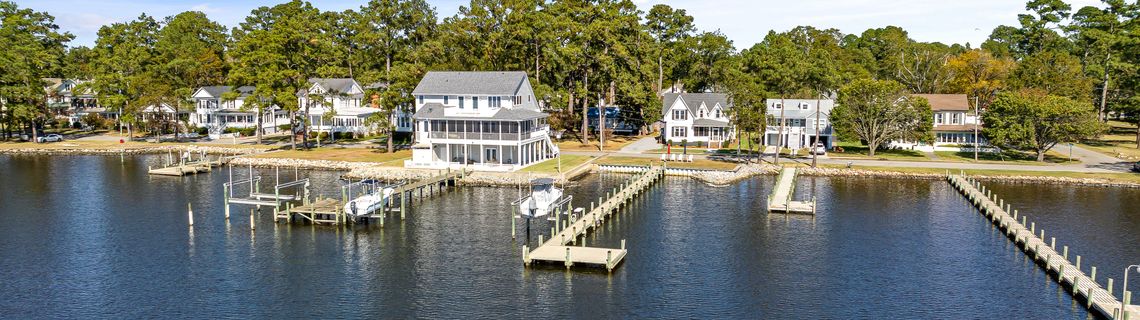
Washington is the county seat of Beaufort County, situated along the north bank of the Pamlico River approximately twenty minutes east of Greenville via US-264. The city proper has a population of roughly 10,000, while Beaufort County as a whole is home to approximately 47,000 residents. It is a place where the pace of life moves with the river, and where the commercial landscape reflects both a deep agricultural heritage and a community actively reinventing itself.
The name itself carries a distinction that locals are proud of: Washington, North Carolina was incorporated in 1782 and named for General George Washington while the Revolutionary War was still being fought. The federal capital did not adopt the name until 1791, making this the Original Washington. That heritage is woven into the town's identity and its historic building stock, both of which play directly into the commercial real estate opportunity here.
Historically, Beaufort County's economy was built on tobacco, timber, and row crops. While agriculture remains a meaningful part of the local identity, the economic base has diversified over the past two decades. Beaufort County Medical Center serves as a significant employer, providing healthcare access for the county and surrounding rural communities. State and local government offices concentrated at the county seat add another layer of employment stability.
A growing contingent of retirees, artists, and small business owners have been drawn to Washington's waterfront setting and the lower cost of living compared to North Carolina's coastal resort towns. Unlike the Outer Banks or Wilmington-area beach communities where real estate prices reflect national vacation-home demand, Washington offers authentic waterfront living and working at prices that remain accessible to individuals and small operators building businesses with local and regional customer bases.
The proximity to Greenville is a defining advantage for Washington. The twenty-minute drive on US-264 connects Beaufort County residents to the employment, healthcare, and retail offerings of a metro area with nearly 200,000 people, while allowing them to live and operate businesses in a town with substantially lower property costs. This relationship means Washington benefits from Greenville's economic growth without bearing the higher rents and competition for commercial space that come with a university city. Medical professionals working at ECU Health in Greenville, for instance, increasingly choose to live in Washington for the waterfront lifestyle and more affordable housing.
Tourism has become an increasingly important economic contributor. The Pamlico River and its tributaries draw recreational boaters, kayakers, and fishing enthusiasts throughout the warmer months. The NC Estuarium, a state-funded environmental education center on the waterfront, brings visitors and school groups year-round. The Pamlico River water trails, a network of paddling routes mapped and promoted by the state, position Washington as a launch point for outdoor recreation that extends well beyond traditional fishing. Nearby Bath, the oldest incorporated town in North Carolina, adds a historic tourism draw that benefits the broader county.
The arts community has also become a meaningful part of Washington's economic fabric. Galleries, studios, and arts organizations have found a welcoming home in downtown buildings that offer affordable rents and distinctive spaces. This creative cluster draws visitors, supports a calendar of seasonal festivals and events, and contributes to the quality of place that makes Washington attractive to new residents and businesses alike. The Turnage Theatre, a restored early-twentieth-century performing arts venue in the heart of downtown, anchors the town's cultural calendar and draws audiences from across the region.
Washington's downtown has benefited from a series of public and private investments aimed at preserving and revitalizing its historic commercial core. Streetscape improvements, updated signage, and the renovation of several anchor buildings have given the town center a polished but authentic character that appeals to both residents and visitors. The result is a downtown that feels lived-in rather than manufactured, a quality that translates directly into tenant demand for ground-floor commercial space.
Infrastructure in Beaufort County supports the commercial base without the congestion or complexity of a larger metro. Washington's road network is straightforward, parking is generally available and affordable, and the compact geography of the city means that most commercial locations are within a short drive of the entire county population. For business owners, this ease of access translates into lower friction for customers and employees. For investors, it means that location analysis is more about choosing the right corridor or block than navigating the layered submarkets of a large city.
For commercial real estate purposes, Washington occupies an unusual position in the eastern North Carolina landscape. It is large enough to support a functioning downtown commercial district with diverse tenants, a regional medical facility, and a county government complex, yet small enough that individual investors and business owners can have a meaningful impact on the market. A single well-executed adaptive reuse project or a thoughtfully positioned new restaurant can shift the trajectory of an entire block. That kind of leverage is simply not available in larger metro markets where individual properties are absorbed into the broader noise.
Property Types in Beaufort County
Waterfront commercial property is the signature asset class in Washington. Restaurants, tasting rooms, and event venues along the Pamlico River command the strongest rents relative to purchase price in the county. Marina operations and water-access retail benefit from seasonal boating traffic and a growing interest in waterfront dining and entertainment. Mixed-use buildings along the river that combine ground-floor commercial with upper-story residential or short-term rental space are among the most sought-after investment opportunities in the market.
Downtown Main Street retail occupies a compact, walkable commercial district that runs parallel to the Pamlico River. The storefronts here house a mix of boutique retail, antique shops, art galleries, specialty food stores, and professional services offices. This is not a corridor competing on volume or national brand recognition. Its appeal lies in the curated, small-town experience that draws both local shoppers and visitors exploring the Inner Banks region. Lease rates downtown are modest by any regional comparison, making it feasible for independent operators to test concepts and build customer bases without the overhead pressure that comes with higher-rent markets.
Adaptive reuse projects represent some of the most interesting commercial real estate activity in Beaufort County. Washington's historic building stock includes former tobacco warehouses, early-twentieth-century commercial blocks, and vacant industrial structures that are being reimagined as restaurants, event spaces, creative office, and mixed-use developments. Investors with experience in renovation and historic preservation find compelling opportunities in buildings that can be acquired at a fraction of replacement cost and converted into revenue-producing assets. State and federal historic tax credits can materially improve the economics of these projects, making renovations feasible that would otherwise fall short of return thresholds.
Agricultural commercial properties serve the farming operations that remain central to the county's rural economy. Equipment dealerships, seed and supply businesses, grain storage facilities, and agricultural processing operations occupy parcels along the highways connecting Washington to the surrounding farmland. These properties tend to trade infrequently but represent stable long-term holdings for investors comfortable with the agricultural sector. Beaufort County's productive farmland and its position in North Carolina's coastal plain agricultural belt ensure continued demand for these supporting commercial uses.
Small office and professional space serves the attorneys, accountants, insurance agents, and healthcare practitioners who support the county's population. Demand is modest in scale but consistent, and vacancies tend to be low because new construction is rare. Existing office inventory in and near downtown Washington tends to be well-maintained historic buildings repurposed for professional use. Medical office space near Beaufort County Medical Center represents a focused subcategory with steady tenant demand driven by the county's aging population and the healthcare needs of surrounding rural communities.
Light industrial properties along the US-264 corridor and on the outskirts of Washington support manufacturing, warehousing, and distribution activities. While the industrial market in Beaufort County is smaller than those in neighboring Pitt or Craven counties, the availability of affordable land and proximity to major transportation routes make it viable for regional operators. Seafood processing and marine-related industrial uses add a sector-specific dimension that reflects Beaufort County's position on the Pamlico River estuary system.
Hospitality and short-term rental properties round out the commercial landscape. Bed-and-breakfast operations in historic homes, small inns near the waterfront, and vacation rental conversions cater to the growing tourist trade. As Washington becomes better known as an Inner Banks destination, hospitality properties offer an investment category that benefits from the same waterfront and historic-charm dynamics driving the rest of the market. The seasonal nature of tourism in Beaufort County means hospitality operators should plan for revenue fluctuations between the busy spring-through-fall boating season and the quieter winter months, but annual occupancy trends have been moving in a favorable direction.
Mixed-use buildings that combine commercial ground floors with residential or office upper stories are particularly well-suited to Washington's downtown. These properties diversify income streams within a single investment, reduce vacancy risk by serving multiple tenant types, and align with the walkable, compact development pattern that makes historic downtowns function well. Buyers who understand how to structure leases across residential and commercial components can achieve blended returns that outperform single-use properties in the same location.
Why Invest in Washington Commercial Real Estate
Entry points in Beaufort County are among the lowest in my coverage area. Acquisition costs per square foot for commercial properties in Washington are meaningfully below those in Greenville, New Bern, or Jacksonville. For investors looking to build a commercial portfolio without the capital requirements of a larger metro, Washington offers a way to get started or to add cash-flowing assets at price points that are increasingly difficult to find elsewhere in eastern North Carolina.
Waterfront premium is real and durable. Commercial properties with Pamlico River views or water access consistently command rents that outperform comparable inland space by a significant margin. Unlike coastal resort markets where waterfront premiums are already priced into sky-high acquisition costs, Washington still offers the chance to acquire waterfront commercial at prices that generate attractive yields from day one. The river itself is the amenity, and it cannot be replicated or relocated.
The adaptive reuse trend is creating value from Washington's existing building stock in ways that benefit early movers. Historic structures that sat vacant or underutilized for years are being converted into productive commercial space, often with the support of state and federal historic tax credits that improve project economics. Investors who can identify the right buildings and execute thoughtful renovations are generating returns that newer construction in the same market simply cannot match.
The cost of doing business in Beaufort County is favorable across nearly every line item. Property taxes, insurance premiums, and construction labor costs are all lower than what investors encounter in the Triangle, the Triad, or even the larger coastal markets. For owner-occupants opening a business, these savings translate directly into better operating margins. For investors, they mean lower carrying costs and a shorter path to positive cash flow on newly acquired or renovated properties.
Greenville's growth provides a spillover effect. As Pitt County expands and property costs there continue to rise, some businesses and residents look to nearby communities that offer lower costs without sacrificing access to Greenville's amenities. Washington is the primary beneficiary of this dynamic because of the short, easy commute on US-264. Each new household or business that relocates strengthens demand for commercial services and space in Beaufort County.
Demographic trends are also favorable for certain commercial property types. Beaufort County's population skews older than the state average, which supports demand for medical office space, healthcare-related retail, and senior-oriented services. At the same time, the affordability and waterfront appeal of the area are attracting younger entrepreneurs and remote workers who are building small businesses downtown. This dual demographic dynamic creates demand across a wider range of commercial uses than the county's modest population might suggest at first glance.
State and local reinvestment programs are working in the investor's favor. Washington's participation in the North Carolina Main Street program has brought planning resources, facade improvement grants, and community development attention to the downtown district. These public investments reduce risk for private investors by improving streetscapes, pedestrian infrastructure, and the overall attractiveness of the commercial core.
The tourism trajectory adds another layer of upside. As North Carolina's Inner Banks gain recognition as a more affordable and less crowded alternative to the Outer Banks, Washington is positioned to capture a growing share of visitor spending. Restaurants, lodging, and experiential retail that cater to this traffic can perform well relative to the modest capital required to enter the market. For investors who have seen what waterfront-driven tourism has done for property values in towns like Beaufort (Carteret County) or Edenton, Washington represents an earlier-stage version of a similar story.
Limited new construction keeps supply constrained in the most desirable locations. Unlike faster-growing markets where new retail centers and office buildings regularly come online, Washington's commercial inventory grows slowly. For existing property owners and investors acquiring buildings now, this supply discipline supports occupancy rates and limits downward pressure on rents over time.
Finally, the quality-of-life appeal of Washington should not be underestimated as a commercial real estate driver. Business owners who want to operate in a scenic, walkable, waterfront community are choosing Washington over more conventionally productive markets precisely because of what the town offers beyond the numbers. A restaurant owner who could lease space in Greenville at higher traffic counts may instead choose a Pamlico River-facing location in Washington because the setting itself becomes part of the brand. That kind of lifestyle-driven tenant demand adds resilience to the market because it is motivated by more than pure financial optimization.
Key Areas & Corridors
US-264 is the primary commercial artery connecting Washington to Greenville to the west and the Outer Banks region to the east. The corridor through and around Washington supports highway-oriented commercial development including gas stations, convenience retail, fast food, and light industrial. Properties along US-264 benefit from consistent through-traffic and serve as the gateway to the town for visitors and commuters alike. As Greenville continues to expand eastward and traffic volumes on US-264 grow, commercial parcels along this corridor in the Washington area stand to benefit from increased visibility and access.
Main Street downtown is the heart of Washington's commercial identity. This walkable district runs close to the Pamlico River waterfront and concentrates the town's boutique retail, dining, and professional services in a compact grid of historic storefronts. Ground-floor commercial spaces here cater to tenants who value character, foot traffic, and proximity to the river. The district is the focal point of most adaptive reuse and reinvestment activity in the county. Several blocks of contiguous storefront buildings create the kind of critical mass that sustains foot traffic and gives the downtown a sense of vitality that smaller, more scattered commercial nodes cannot replicate.
Bridge Street connects across the Pamlico River and serves as a secondary commercial corridor linking downtown Washington to neighborhoods and commercial areas south of the river. Traffic counts along Bridge Street make it relevant for retail and service tenants seeking visibility without paying Main Street rents. The corridor also benefits from its role as the primary route for travelers approaching Washington from the south, giving businesses along this stretch exposure to visitors who may not otherwise pass through the downtown core.
John Small Avenue runs through the heart of Washington's residential neighborhoods and supports a mix of neighborhood-oriented retail, medical offices, and professional services. Businesses along this corridor serve the daily needs of the local population and benefit from steady, repeat customer traffic. Lease rates here are meaningfully lower than the downtown core, making it an attractive option for service providers, healthcare practitioners, and small retailers who depend on local patronage rather than tourist foot traffic.
Carolina Avenue provides additional commercial frontage on the east side of town, connecting residential areas to the US-264 corridor. Small-format retail, convenience services, and professional offices along Carolina Avenue offer practical, affordable space for businesses that need visibility and parking without the premium associated with downtown or highway-adjacent locations.
Bath, located about fifteen minutes east of Washington, is the oldest incorporated town in North Carolina and draws a steady stream of history-oriented visitors. Historic Bath State Historic Site, operated by the North Carolina Department of Natural and Cultural Resources, preserves colonial-era structures and hosts educational programming that brings school groups, heritage tourists, and history enthusiasts into the county throughout the year. While commercial activity in Bath itself is limited, the tourism traffic it generates benefits Washington's restaurants, hotels, and retail establishments. Investors considering Washington should factor in Bath's visitor base as a supplemental demand driver for food, lodging, and experiential retail in the county seat.
The waterfront district along the Pamlico stretching from the town docks toward Havens Gardens Park forms a recreational and commercial spine that connects several of the corridors above. Public boardwalks, boat slips, and green space along the river make the waterfront a natural gathering point and anchor for adjacent commercial activity. Properties with river frontage or sightlines to the water consistently outperform comparable inland locations in both rental rates and resale value. Seasonal events, outdoor concerts, and farmers markets along the waterfront drive foot traffic that benefits nearby commercial tenants throughout the spring, summer, and fall months.
Market Street and 15th Street provide additional commercial frontage closer to the residential neighborhoods east of downtown. Small-format retail, professional offices, and service-oriented businesses along these corridors serve a local clientele and benefit from lower occupancy costs than the downtown core. For tenants who need functional space rather than historic character, these corridors offer practical alternatives.
Chocowinity, a small community located just west of Washington along US-264 toward Greenville, has seen modest commercial development driven by its position midway between the two towns. Gas stations, convenience retail, and a handful of small commercial operations serve commuters traveling the corridor daily. While not a standalone commercial market, Chocowinity parcels occasionally present opportunities for investors looking for highway-visible land at some of the lowest prices in the area.
Taken together, Washington's commercial corridors form a compact but layered market. The downtown and waterfront serve destination-oriented tenants who draw from the county and beyond. The secondary avenues serve neighborhood needs. And US-264 captures through-traffic. Understanding which corridor fits which business model is essential to making a sound leasing or acquisition decision in Beaufort County.
Working with Sebastian in Beaufort County
Washington is the closest market to my Greenville base, and that proximity means I know it well. I am in Beaufort County regularly, which gives me firsthand insight into which buildings are changing hands, which storefronts are being renovated, and where the next wave of commercial activity is likely to emerge. In a market this size, relationships matter more than marketing reach, and I have built the local connections needed to surface opportunities that never make it to the major listing platforms. Many of the most interesting commercial properties in Washington change hands through word of mouth or direct negotiation long before they are listed publicly.
Small-market commercial real estate requires a different approach than working in a metro area. The comparable sales data is thinner, the tenant pool is more concentrated, and the success of an investment often hinges on understanding the specific dynamics of a particular block or corridor. I bring the financial analysis tools of a CCIM candidate to a market where many deals are still done on a handshake. That combination of analytical rigor and local knowledge is what allows me to help buyers model renovation ROI on adaptive reuse projects, evaluate waterfront premiums with realistic rent projections, and structure deals that work in a small-market context.
Larger brokerages based in Raleigh or the Triangle tend to overlook markets like Washington because individual deal sizes are smaller and the volume of transactions is lower. That creates a gap in professional advisory services that I fill deliberately. My clients in Beaufort County get the same caliber of financial analysis, negotiation support, and market intelligence that a buyer in a major metro would expect, applied to a market where that level of service is genuinely rare.
For business owners looking to lease space in Washington, I can help you evaluate locations based on foot traffic patterns, parking availability, lease structure, and proximity to the customer base you need to reach. For investors, I provide detailed financial modeling that accounts for the realities of a small market: seasonal revenue fluctuations for waterfront properties, renovation cost estimates grounded in local contractor pricing, and rent projections based on actual comparable leases rather than regional averages that may not apply.
My brokerage at Mullarkey Real Estate Group, Inc. provides the operational infrastructure and regional market reach that a solo advisor in a small market cannot offer alone. When a Beaufort County deal requires coordination with lenders familiar with adaptive reuse projects, environmental consultants for waterfront properties, or attorneys versed in historic tax credit structuring, I can connect clients with the right professionals because my firm operates across the broader eastern North Carolina region every day.
I also work with out-of-state investors who are discovering Washington for the first time. Many come from markets where commercial real estate prices have risen to the point where cash-on-cash returns are thin, and they are drawn to Beaufort County because the numbers actually work. For these clients, I provide not just property identification and deal analysis but also the local context needed to invest confidently in a market they have not yet walked themselves. I can tell you which blocks are improving, which buildings have deferred maintenance issues that are not visible in listing photos, and which tenants have been in place long enough to signal stability.
Whether you are considering your first commercial acquisition in a market where the barriers to entry are low, evaluating a waterfront property that could become a destination restaurant or event venue, or looking at a historic building with adaptive reuse potential, I can help you assess the opportunity clearly and move forward with confidence.