Market Overview
Kinston sits roughly 30 miles southwest of Greenville along the US-70 corridor, serving as the county seat and economic center of Lenoir County. The city has a population of approximately 20,000, with the broader county at around 55,000 residents. For decades, Kinston's economy was anchored by tobacco and textile manufacturing — industries that built the infrastructure, the workforce, and the building stock that still define the commercial landscape today.
That foundation has shifted considerably, but the industrial DNA remains. Spirit AeroSystems and West Pharmaceutical Services are among the county's largest employers, maintaining significant manufacturing operations that sustain both jobs and demand for commercial and industrial space. Lenoir County Community College supports workforce development aligned with advanced manufacturing and healthcare, and regional government services based in the county seat generate steady office and retail demand.
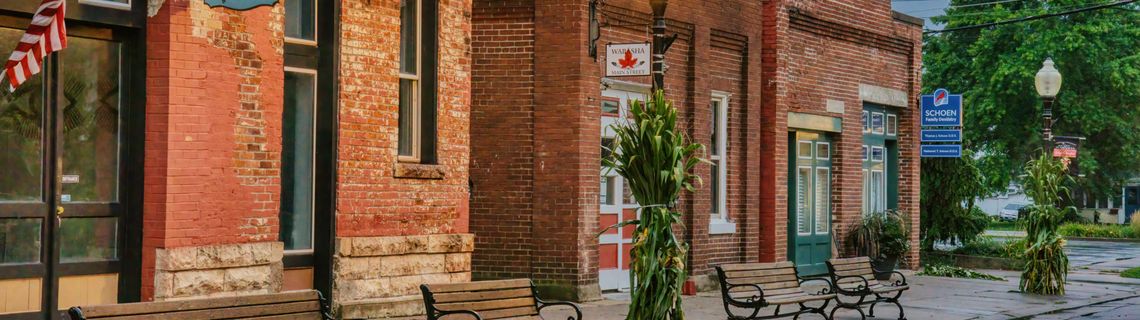
What has changed is the cultural layer. Chef & the Farmer, the restaurant that put Kinston on the national food map through the PBS series "A Chef's Life," helped spark a revitalization of the downtown core. Mother Earth Brewing added another anchor. These ventures brought foot traffic, media attention, and a new generation of entrepreneurs to a city that most Triangle-area residents had never visited. The result is a commercial market in genuine transition — property values have not yet caught up to the momentum, which creates a window for investors and business owners who recognize what is happening before the broader market prices it in.
Property Types in Lenoir County
Industrial real estate is the standout sector. The county's manufacturing history left behind a significant inventory of large-footprint buildings — former textile mills, tobacco warehouses, and production facilities — many of which sit partially occupied or vacant. For investors with a value-add thesis, these buildings represent conversion opportunities that simply do not exist in tighter markets like Greenville or Raleigh. Ceiling heights, column spacing, and heavy power infrastructure make many of them viable for modern light manufacturing and distribution without substantial structural modification.
Warehouse and distribution space is increasingly relevant as the county's position along US-70 connects it to both the Triangle and the coast. Logistics operators looking for lower-cost alternatives to the I-40 corridor have started paying attention to Lenoir County's available inventory and land. The proximity to the Global TransPark adds an air-cargo dimension that most secondary markets in Eastern NC cannot offer.
Retail activity concentrates along Vernon Avenue and Queen Street in downtown Kinston. The revitalization has created demand for restaurant, boutique, and service-oriented retail spaces, though vacancy remains higher than in peer markets. Strip retail and convenience-anchored centers along the main highway corridors serve the broader county population. For retail investors, the play is often acquiring multi-tenant strip centers at cap rates above comparable properties in Greenville or Goldsboro.
Office space tends to be smaller-scale — professional services, medical, and government-related tenants make up the majority of demand. Purpose-built medical office near Lenoir County UNC Health Care sees the steadiest absorption. Agricultural-related commercial properties round out the market: equipment dealerships, farm supply retailers, cold storage, and processing facilities tied to the region's continued agricultural output.
Why Invest in Kinston Commercial Real Estate
The case for Kinston comes down to price points and trajectory. Cap rates on income-producing properties in Lenoir County consistently run higher than what investors find in Greenville, Goldsboro, or New Bern — to say nothing of Raleigh or Charlotte. For yield-focused investors, that arithmetic is compelling. You are buying at a basis that gives you margin for error, and in commercial real estate, margin for error is how you survive the cycles.
Several factors support a positive outlook. Spirit AeroSystems has expanded its Kinston operations in recent years, reinforcing the industrial employment base and creating downstream demand for housing, retail, and services. The county and city have been proactive about economic development, offering incentives and infrastructure improvements designed to attract new employers and retain existing ones.
The North Carolina Global TransPark, a state-owned multimodal industrial facility located just south of Kinston, provides runway — literally — for aviation, aerospace, and logistics tenants with unique infrastructure needs. The TransPark's Foreign Trade Zone designation and rail access add capabilities that make the surrounding land and buildings more valuable than their current pricing suggests.
Opportunity Zone designations cover portions of Kinston, offering qualified investors the potential for significant tax advantages on capital gains reinvested in the area. When combined with lower acquisition costs, these designations create a layered incentive structure that pencils out on deals that would not work in higher-cost markets. I have helped investors model these scenarios and the numbers can be meaningful.
Perhaps most importantly, Kinston has attracted growing interest from Triangle-area investors who have been priced out of Raleigh and Durham. As those markets have compressed cap rates and bid up prices, capital has started moving east along the US-70 corridor. Kinston is close enough to the Triangle to be accessible for a day trip, but far enough that local pricing has not yet fully adjusted to the inflow of outside capital.
Key Areas & Corridors
The US-70 corridor is Kinston's primary commercial artery. US-70 connects Raleigh to the coast, running directly through Kinston and carrying both commuter and freight traffic. Commercial properties along this corridor benefit from regional accessibility, visibility, and the steady flow of travelers between the Triangle and the Crystal Coast. Highway-fronting retail, quick-service restaurants, and hospitality properties along US-70 tend to perform well relative to their acquisition cost.
Vernon Avenue serves as Kinston's main commercial strip, with a mix of retail, service, and dining tenants. Properties along Vernon benefit from established traffic patterns and proximity to the downtown core. This is where most of the everyday commercial activity in Kinston takes place — the kind of street that rewards patient, income-oriented investors.
Queen Street anchors the revitalizing downtown district. Chef & the Farmer, Mother Earth Brewing, and a growing cluster of small businesses have created a walkable corridor with genuine character. Adaptive reuse projects in this area have generated outsized returns for early movers, and available inventory remains for the next phase.
NC-11 runs south from Kinston toward the county's industrial parks and the Global TransPark. This corridor is the most relevant for industrial and logistics-oriented investments. The TransPark — with its 11,500-foot runway, rail access, and Foreign Trade Zone designation — offers capabilities that few sites in Eastern North Carolina can match. Aerospace and advanced manufacturing tenants have already established operations there, and surrounding land remains competitively priced.
Working with Sebastian in Lenoir County
Kinston is roughly a 30-minute drive from my home base in Greenville, and I am in and around Lenoir County regularly. That proximity means I know the brokers, the property owners, the economic development staff, and the institutional players who shape deal flow in this market. Lenoir County is small enough that relationships matter more than listing platforms — a significant share of the best opportunities trade off-market or through direct outreach, and you need someone who is plugged into that network.
My financial analysis background is particularly relevant for Kinston deals. Many of the opportunities here involve value-add scenarios — repositioning an underperforming industrial building, converting a legacy warehouse to flex space, or assembling a portfolio of lower-cost retail properties. These deals require honest underwriting: accurate renovation budgets, realistic rent projections, and a clear-eyed view of absorption timelines in a secondary market. That discipline is what I bring to every engagement, and it is why my clients avoid the overpaying that sinks value-add deals before they start.
I also work with business owners in Lenoir County who need space — whether that is a first retail location on Vernon Avenue, a professional office near the hospital, or an industrial facility with specific power or ceiling-height requirements. Tenant representation in most commercial lease transactions costs you nothing directly; the landlord pays the commission. My job is to find you the right space at the right terms. Whether you are a local business owner, an investor evaluating your first Kinston acquisition, or a Triangle-based buyer exploring eastern markets for the first time, I can help you understand what is available, what it is worth, and how to structure a deal that makes financial sense. The first conversation is free and there is no obligation.